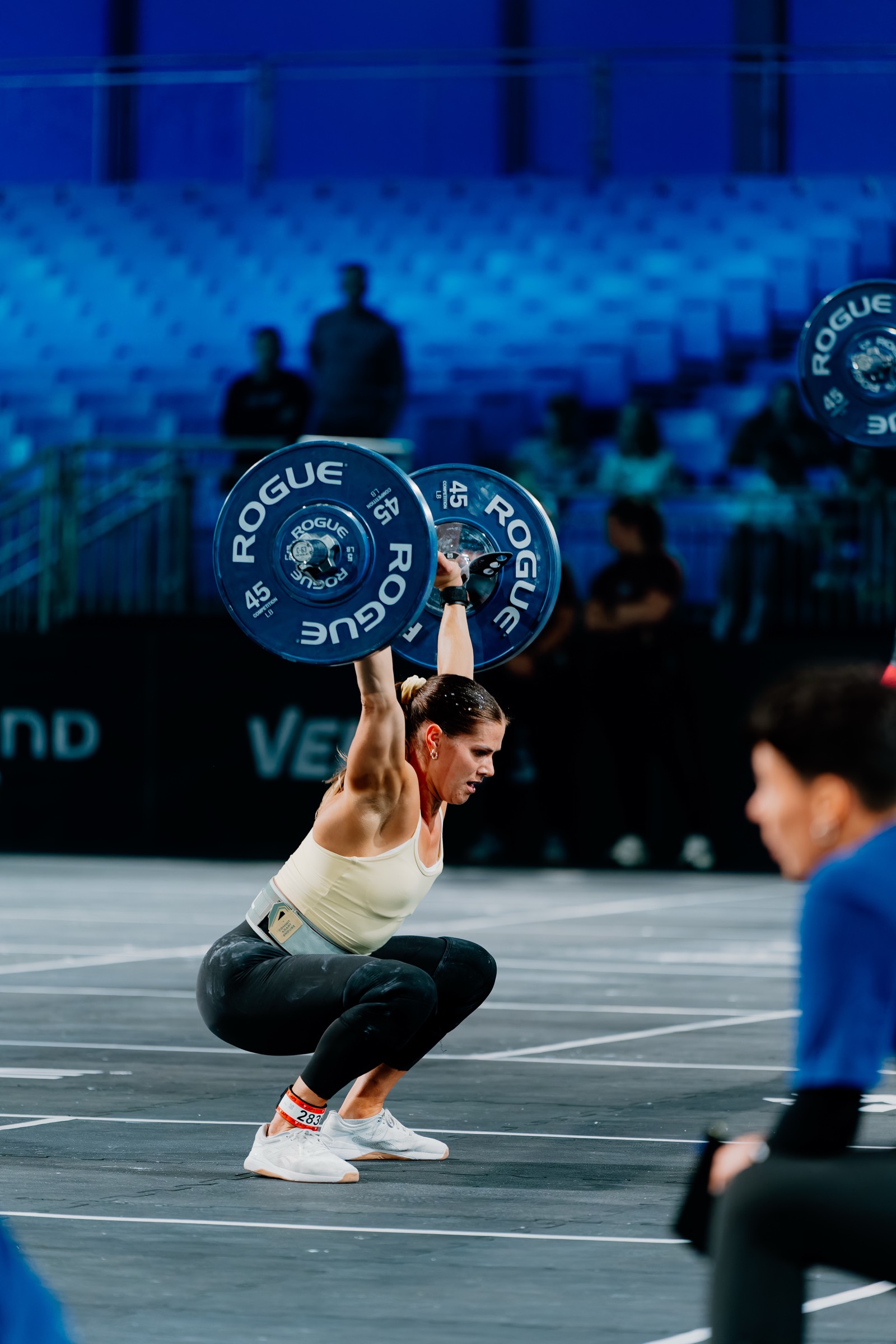
Six weeks where we move our capacities forward more separately, before we put them together again in the next CF Specific Block.
Block 5 of 8 of the year, and once again we are moving into a Building Block. The main focus in a Building Block is to move our capacities forward more separately, before we put them together again in the next CF Specific Block.
This is the formula we use with all our athletes, and it is something that usually gives very good results. First we improve the capacities, then we put them together. Think about it this way: in the Building Block we turn the Ford into a Ferrari, one part at a time. In the CF Specific Block we learn how to drive it, so that all the new horsepower actually shows up in the workouts and not only in the gym.
As you probably know by now, we always do 6 weeks of Building Block and 6 weeks of CF Specific Block before we do a Test Week to measure our progress. The Test Week also feeds into your Athlete Profile, and the more complete the Athlete Profile gets, the easier it is for you to see where you are already good and which capacities you need to work more on.
This format, 12 weeks at a time, also makes it easier for us to organize the training. There are so many movements, capacities and time domains in CrossFit that it is hard to improve everything at once. But one of our main principles when we design the program is that it is a lot easier to maintain a capacity (minimum effective volume) than to improve one (where we want optimal volume).
So when we plan the year, we simply decide what we are going to get better at, and when. And usually this works. The amount of training of course differs, but the principle works both for the elite and for athletes at a lower level.
Our main goal in the upcoming block is to improve the following:
At the end of Block 6 we do the following tests:
Like in the previous blocks we run the training in A and B weeks, so most progressions come back every other week. Below you see how the two weeks are built, based on the first two weeks of the block. We only show the focus of each part of the session here. The exact sets, reps and percentages you find in the program.
Conditioning pieces in bold. Week A and Week B alternate through the main part of the block, with the step in each progression moving forward. The block finishes with a few days of deload and the VO2max week.
A big part of this block is to build better positions. This goes for the Front Squat, where you will see Zombie Squats, Bottom Up Squats and accessory movements for the upper back. The last time we focused on the Front Squat we put more emphasis on the quads. In this block the focus is more equal between the upper back and the quads.
For the Snatch we also focus on positions, and specifically on getting a better catch position. We do this with more pauses in the catch, and with accessory movements: bigger ones like Snatch Balance and Narrow Grip Overhead Squat, and smaller ones that target the muscles around the shoulder blade.
If you know that mobility is one of your limiting factors in the Snatch or the Squat, feel free to use our Mobility Webapp. There you get a personal 12 week plan to improve your positions.
While there is a lot of focus on depth for both the Squat and the Snatch, we have chosen the Barbell Clean and the Sandbag Clean as the movements that will help us get better at creating power and height. In the start of the block we do a lot of lighter Power Cleans for max speed, while we do heavier Sandbag Cleans and Carries for battery work.
We often see that when we add extra Sandbag Cleans, the barbell work gets better as well. We rarely see it the other way around.
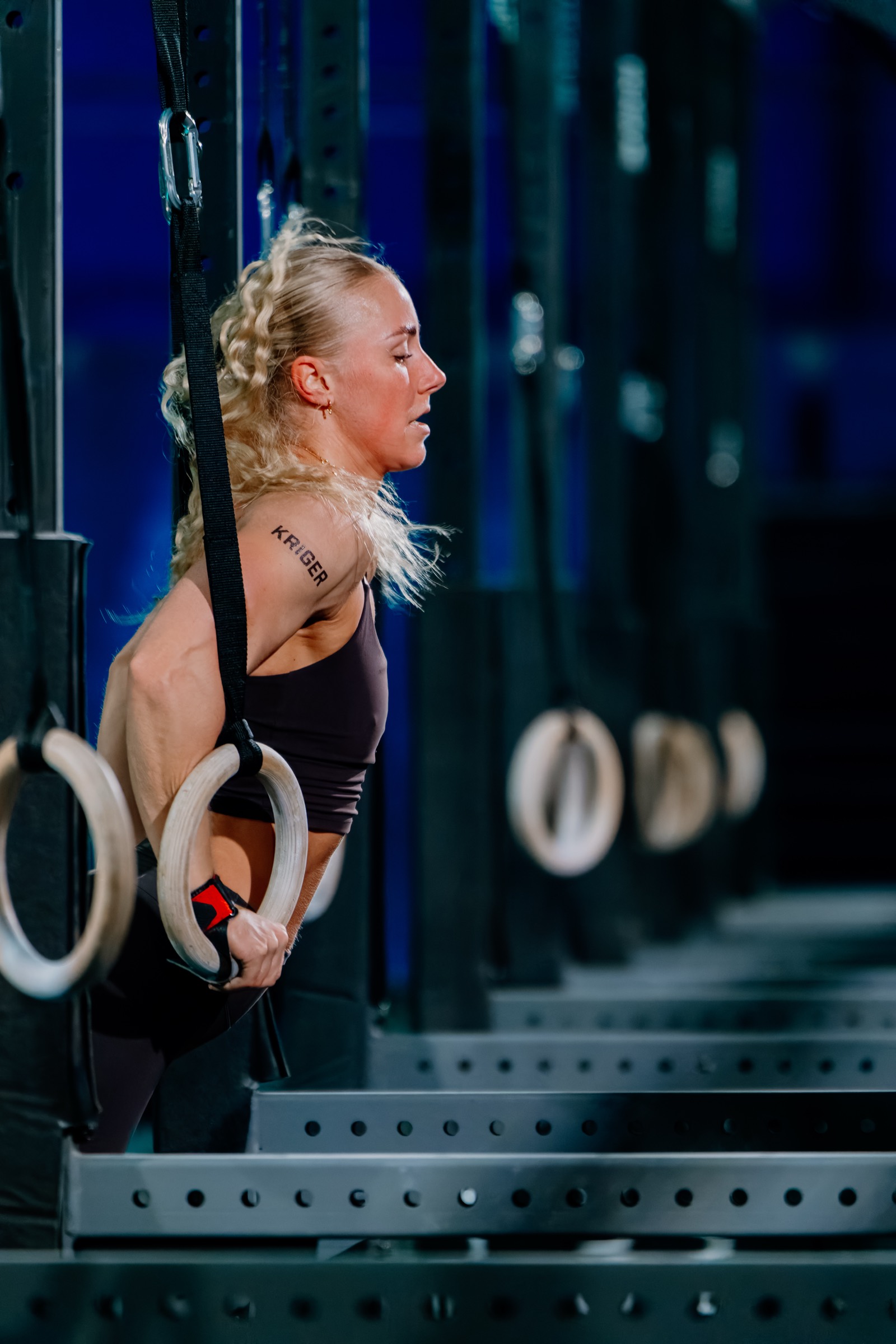
This is the block where we work less on rep endurance in the lighter gymnastics, and instead try to make big moves on the more advanced gymnastics. The goal will be different for each level, but what looks the same for everyone is the upper body strength. The goal is to improve the 1 RM Supinated Pull Up, and for the press we do a lot of uneven work together with more specific Strict HSPU work.
For the gymnastic movements this is the focus:
The goal is to get better at pirouettes, obstacles and walking in different directions. Two times a week we work on different variations.
The goal is to improve our technique at high reps in Block 5, and then in Block 6 do more reps close to failure to increase our max reps.
Increase the deficit.
The goal is to start the skill journey: walk over obstacles like plates, start to do turns and so on.
The main goal is to improve the technique so that we use as little energy as possible in each set. Feel free to send us a video in the start of the block to get your focus points.
Increase the deficit.
The goal in this block is to start walking on our hands on the floor. We work on progressions at the wall in the start of the block, and if possible also partner assisted walks to get used to walking more freely.
For the Muscle Ups the first thing we need to make sure is that we are strong enough. For Level 1 the progressions we mainly work on are technique progressions, but if you are not strong enough yet we are happy to put you on our Muscle Up Strength Program to build the base you need. As a reference you can look at the numbers below.
Get to our first Strict HSPU. We do this by increasing general press strength and by working more technically, with plates under the head to decrease the range of motion.
| 71–80% of BW | |
|---|---|
| 81–90% | |
| 91–100% | |
| 101–110% | |
| 111–120% | |
| 121–130% | |
| 130–140% | |
| 140–150% | |
| 150–160% | |
| 160–170% | |
| 170% of BW |
In addition, for all levels, we work on lighter gymnastic combinations with squats, in order to improve our chances of a good test of Friendly Fran at the end of Block 6. Burpee Pull Ups, Toes to Bar and CTB Pull Ups into squat movements is something you will see a lot of.
You will not see many Friendly Fran progressions in Block 5. The reason for this is that we want to save the test, and not only get better at that exact combination. We would rather use the test to get better at squat and pull combinations in general, and get a wider range of our fitness.
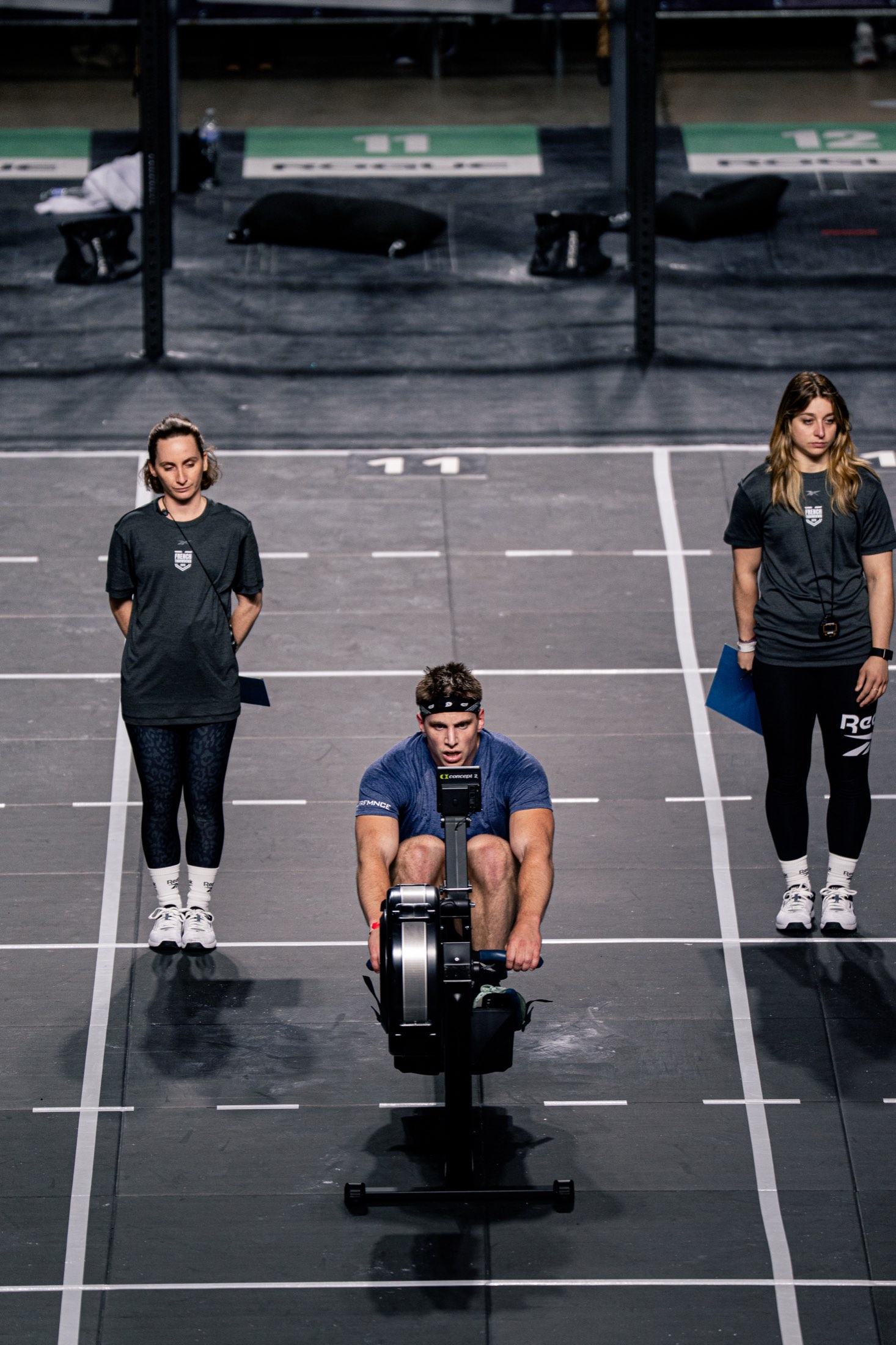
You will see some new formats for the endurance training in this block. For one, we do more machines and less running than in the previous four blocks (see the Engine Track if you want to keep running twice a week). Our main goal is to improve our score in Mikkos Triangle, which we test at the end of Block 6.
Every other week in Block 5 we do a progression toward this test.
The reason we have put Mikkos Triangle as our main endurance test in this block is that we want to build our aerobic engine before we start doing more intense conditioning toward the qualifier periods this winter. The longer intervals we do in this block set us up to handle the shorter workouts at higher intensity later on. Think about this block as building the bottom of the pyramid. In Block 7 and 8 we build the top, and thanks to the wider base we are able to build the pyramid higher.
Every other week we do a Mikkos Triangle progression, and every other week a Bike Erg progression. If you have your FTP results they will help you set the paces, but you do not need to do an FTP test before this block. We simply use the first workout to find the paces to work with.
In the first week we keep a little extra control in the start of the week for the mixed modal training, to make sure that the metcons do not interfere too much with our other capacities. We do a lot of intervals to collect more reps at high speed with less fatigue. What is more important in a Building Block like this than in a CF Specific Block is that you always have even or negative splits. Being able to move faster for each interval is a sign that you are attacking the intervals correctly and not building unnecessary fatigue. Do this by using a little longer time in each transition in the start of the set, and then build the pace from there.
At the end of Block 5, after a few days of deload, we do our third VO2max Block of the year. The reason we do this is that we have seen a bigger increase in VO2max when we give the body an extra punch with more VO2 intervals in a shorter time window than when we spread them out.
The research supports this. Rønnestad et al. (2012) compared two groups of trained cyclists over 4 weeks. Both groups did the same total volume and intensity of high intensity training. The only difference was how the sessions were organized. One group concentrated 5 HIT sessions into a single week and then did 1 session per week for the remaining 3 weeks. The other group spread it out with 2 sessions per week for all 4 weeks. The result: the group that concentrated their high intensity work improved VO2max by 4.6% and power output at lactate threshold by 10%. The group that spread it out saw no significant improvement at all.
Rønnestad et al. (2012), Scand J Med Sci Sports. Trained cyclists, 4-week intervention. More about the VO2 Blocks in the Block 1 guide.
All tracks follow the same A/B structure. How the tracks work and how to choose is explained in the Block 1 guide.
The program as it is written, with the full focus on positions, gymnastics and the machines.
A little less conditioning and more accessory work, to keep the quality as high as possible on the lifts.
More conditioning, and in this block the Engine Track keeps the running twice a week while the Main Track moves more of the work to the machines.
The Add-On programs continue as before: 10–20 min, 3 times a week, done as the first part on Monday, Wednesday and Friday. With Muscle Ups, Handstand Walk and Strict HSPU as focus points in this block it is a good time to pick the one that is holding you back. New for this block is an optional Heat Training Add-On for the Main Track and the Engine Track, you find everything about it further down on this page. And if mobility is what limits your positions, the Mobility Webapp gives you a personal 12 week plan.
We have just completed Test Week 2 of 4, and every Test Week adds another layer to your Athlete Profile. With two of them done we can start to look at patterns in your profile: what you should prioritize more, and what only needs to be maintained. This is what helps us make your training more individualized.
This is where we might see that the reason your Muscle Up is lagging is not your technique in the Ring Muscle Up, but your strength in the Pull Up. Or we might see that you are doing very well in the shorter time domains, but that we need to do a better job building your aerobic capacity. These are things that are hard to see from one workout, but easy to see when the tests are put next to each other.
Already when you put in your scores you get a level and a score for each test. But wait until Wednesday to confirm your levels, because we use Monday and Tuesday to validate each level based on everyone’s results.
If you want help adjusting the upcoming block to your needs, send us a message in the Fitr chat. We then go into your profile, check the numbers and recommend the best way forward. Often the answer is already on this page: a different track, an Add-On program or the Heat Training block.
At Kriger Training we look at a lot of other sports to see if there is anything we can learn. This is how we developed the speed OLY Training and the plyometrics we do, and this is also how we earlier this year created the Nutrition App, with a lot more carbs and carb timing around the sessions than before.
Our individual Elite Athletes usually work as the lab for this. If the cost is low and the effect looks promising, we are ready to try it with an athlete who has that specific need. If one or more of them get really good results, it is something we continue with and bring into a bigger group setting. Many progressions, accessories and even the design of the training week have started with a coach adding it to one athlete.
Heat Training is one of these cases. We started with it as preparation for competitions in a warm climate, but along the way we saw really good responses in the overall endurance development of the athletes. The feeling from many of them was that it took them into better overall shape with very little effort, if we look away from all the clothes you need to bring and wash. That made us dig deeper into the science of heat training and work on a protocol that could work for CrossFit.
The way we do heat training is, apart from being very hot, not particularly hard. This is what makes it extra valuable for us. We get very good responses without making the muscles more tired, so it affects the rest of the training very little. A typical session is done on the bike at a pace lower than your Zone 1 pace.
After the first longer block with 4–5 sessions a week it is easy to maintain the effect with lower volume. The reason we will run these blocks several times a year is that the effect allows us to move faster in workouts, and over time that lifts other parts of the fitness beyond the ones mentioned above.
To be very clear, it is not for everyone. About 50–60% of our Elite Athletes have regular Heat Training Blocks during the year, the others only do it before competitions in the heat.
Heat Training is an optional Add-On for the Main Track and the Engine Track. Every week we do two sessions of 25 min heat that we combine with the interval work, and one or two standalone sessions of 50 min on the bike.
The reason we do not start in week 1 of the block is that we first want to put the energy into the new progressions and adapt a little to them.
Since we combine some of the heat sessions with our interval work, the easiest way for most people is to add clothes. We use the following:
We also strongly recommend a scale for tracking body weight. It is also smart to have a heart rate monitor and a thermometer, both to make it safer and to make sure you get into the target zone.
The target in a session is a core temperature of 38.5–39°C (rectal) or 38–39°C (temporal), and a body weight loss of 1.6–2% during the session. For a 70 kg athlete that is 1.1–1.4 kg. Weigh yourself naked before every session, measure the temperature within 1 min after, dry off and weigh yourself again. If you lost less than 1.5% you drink a little less during the next session, and if you lost more than 2.5% you drink a little more.
Stop the session if: the core temperature goes above 39.5°C, or the weight loss is more than 3% of your body weight.
We also want you to keep an eye on your morning data. Skip the heat session if your HRV is below 85% of your baseline three days in a row, if the resting heart rate is more than 10 beats above your baseline, or if you rate your sleep quality below 5 out of 10 two nights in a row. If you have the combination of low HRV, high resting heart rate and bad sleep, take a full rest day.
The studies we have used the most when building our protocols:
When we refer to studies like this it can look like it is only positive. It is not that simple. In the cross-country skier study the blood improved but the performance did not, and only about 60 percent of our top athletes use heat training regularly. Over the next weeks we will also post the experience from athletes who have tried it, both very positive and negative, to give a more balanced picture.
Heat Training is exciting and can give great benefits, but it is not for everyone. Over the next weeks we will write more about how to do it, which athletes benefit from it and how to make it safe.
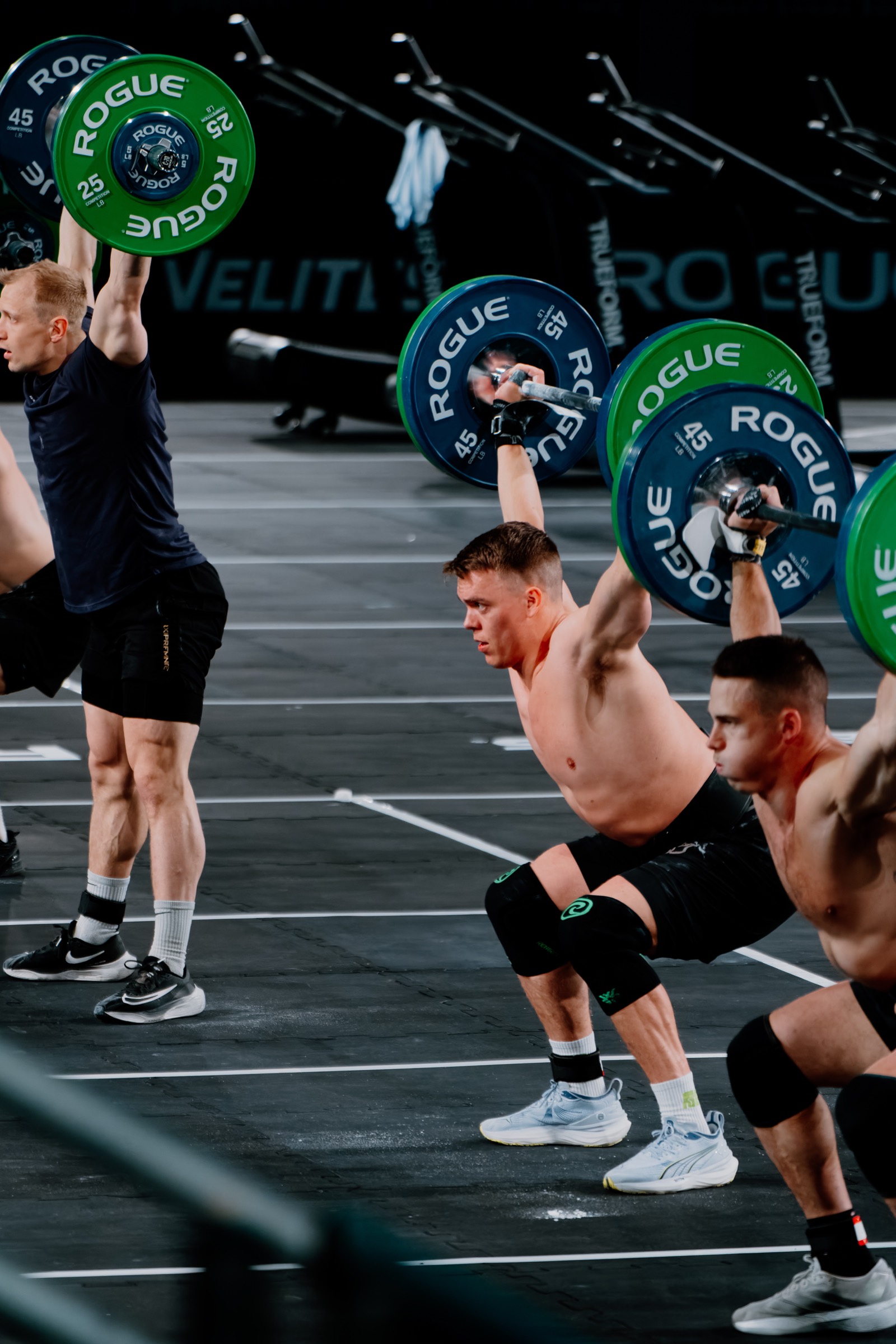
We look forward to the upcoming block, and to attacking the progressions together with you.
Know that you can always reach us in the chat if you need any help. We love to help you!